
Building Background Knowledge About Asia Through Writing: A Writing Across the Curriculum Resource

One of the best ways to strengthen reading comprehension is to build background knowledge. Students cannot fully understand what they read about a place, event, or culture if they don't already know something about it. This is one reason I love combining social studies, reading, and writing. Instead of treating writing as a separate subject, students can use writing to think about and process the information they are learning.
For this resource, students explore six famous places in Asia:
The Great Wall of China
The Taj Mahal
Mount Fuji
Angkor Wat
The Burj Khalifa
St. Basil's Cathedral
Students learn new ideas more effectively when they can connect them to concrete, meaningful examples rather than encountering abstract concepts alone. Instead of simply telling students that geography, history, culture, and architecture are important, this resource gives them real places to explore and remember. When students learn about the Great Wall of China, picture the eruption of Mount Fuji, or examine the design of the Burj Khalifa, they have something specific to picture, discuss, read about, and write about. These concrete examples give students the background knowledge and mental framework they need to make sense of new information and deepen their comprehension.
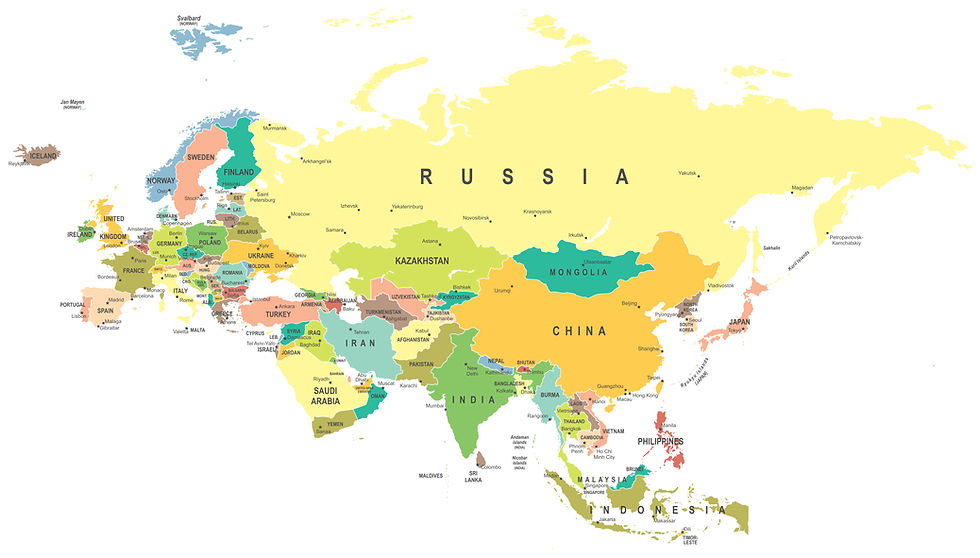
Build Background Knowledge About Asia
Before asking students to read and write about a topic, I want them to have enough knowledge to think about it. I created a presentation that introduces students to six famous places in Asia. The presentation includes photographs, maps, historical information, interesting facts, and memorable stories.
You can use the presentation with your class for free right here:
Explore Asia: Free Presentation
You can use this presentation as a whole-class knowledge-building activity by introducing one place at a time, discussing the information with students, and giving them opportunities to ask questions and make connections. You could also allow students to explore the presentation independently after the initial instruction. Another idea is to use this presentation as a part of a jigsaw activity where students learn about one landmark and share what they learned with their group.
The goal isn't simply for students to memorize six famous places. The goal is to give them specific knowledge they can use when they read, talk, and write about Asia.
Read About What You Have Learned
After students build background knowledge through the videos and images in the presentation, they are ready to encounter the information in another form: informational text.
The reading passages in this resource focus on the same places students explored in the presentation. Because students already have some knowledge about the topics, they aren't encountering every idea for the first time as they read.
This is important because background knowledge can make informational text easier to understand. Students can connect new information to what they already know instead of building their understanding from scratch.

Use Writing to Think About the Content
Writing doesn't have to be a separate activity that happens after students finish learning. Writing can actually help students process what they are learning. For example, after learning about the Great Wall of China, students might expand a simple sentence:
The workers built a wall.
They can add information about who, what, where, when, why, and how to create a much more informative sentence.
Students can also practice combining ideas using conjunctions, writing sentences with subordinating conjunctions, and developing sentences with more precise vocabulary. For example:
The Great Wall was important because it helped protect Chinese territories.
Or:
Although the Great Wall was built over many centuries, people often think of it as one enormous wall.
These activities give students a reason to use the information they have just learned.
Take Notes and Use Them to Write
I also like giving students a simple note-taking page while they learn. Students can record important information about each place, such as:
Where is it?
When was it built or formed?
Why was it important?
Who built it?
How was it originally used?
How is it used today?
What makes it interesting or unusual?
These notes can then become the foundation for a longer writing assignment. For example, students could write a paragraph explaining why one of the five places is historically or culturally important.
They aren't trying to invent something to write about. They already have the knowledge, vocabulary, and notes they need.
Why Combine Background Knowledge and Writing?
When students know a topic, they have more to work with when they read and write.
Instead of giving students a generic writing prompt and asking them to come up with ideas, you can give them something worth writing about. That's the idea behind this resource. Students learn about fascinating places in Asia. They encounter the information through presentation, discussion, reading, and images. Then they use that knowledge to practice sentence construction, note-taking, and longer writing. You're not adding another subject to your day. You're allowing social studies, reading, and writing to strengthen one another.
Use the Presentation for Free
You can use the embedded presentation above with your students for free. If you want the editable version so you can make changes, add your own slides, or use the presentation as a reusable classroom resource, I also created an editable template version for $5.
Whether you use the free presentation or the editable version, I hope it gives your students an opportunity to learn about some fascinating places while strengthening the knowledge and writing skills that support reading comprehension.
Happy teaching!
Looking for another knowledge-building unit? Browse the Science and Social Studies sections of the blog for more free lessons, classroom ideas, and printable resources.


Comments