
Traditional Literature Knowledge Builder

Traditional literature is part of reading standards throughout elementary school and is an important foundation for reading comprehension in middle school and high school. When writers allude to Achilles' heel or the terrifying Baba Yaga, they assume readers have specific knowledge of the folk tales, fairy tales, and fables that make up traditional literature.

In a knowledge builder, students get access to a slide deck where they have some choice about how they interact with it. This year, one of my students was particularly drawn to the John Henry story in the Traditional Literature knowledge builder. She would watch a John Henry read aloud every day before moving on to other options. Some students would jump around while others would watch multiple read alouds from the same topic. Because this is a high-interest topic and the students had a choice in how they engaged with the material, everyone was highly engaged with the knowledge builder when I used it. This allowed me to focus on my small groups without interruptions.
I have built knowledge builders for many topics in my classroom. They are all slightly different based on the content, but my goal is always to keep students engaged. Engagement increases individual learning, and it decreased classroom behavior issues. In my classroom, I always pair independent knowledge builders with larger group activities, so students can apply what they are learning. decreasesdecreases
In my Traditional Literature Knowledge Builder, the first page is a world map. Each black dot on the map represents a specific story or collection of stories from that area. You can see that I have collected many European and American stories, but there are fewer from South America, Africa, and Asia. If you have a suggestion, I would love to add it to the map.
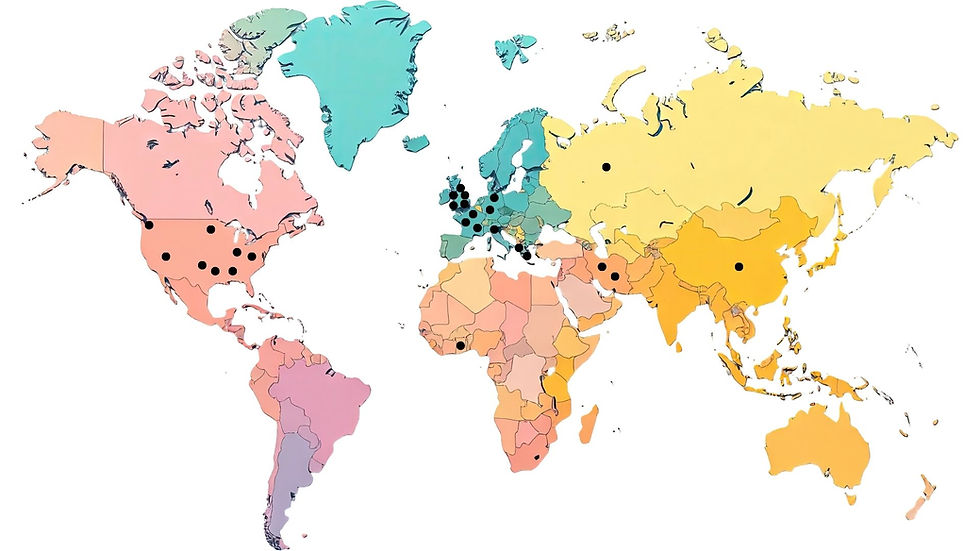
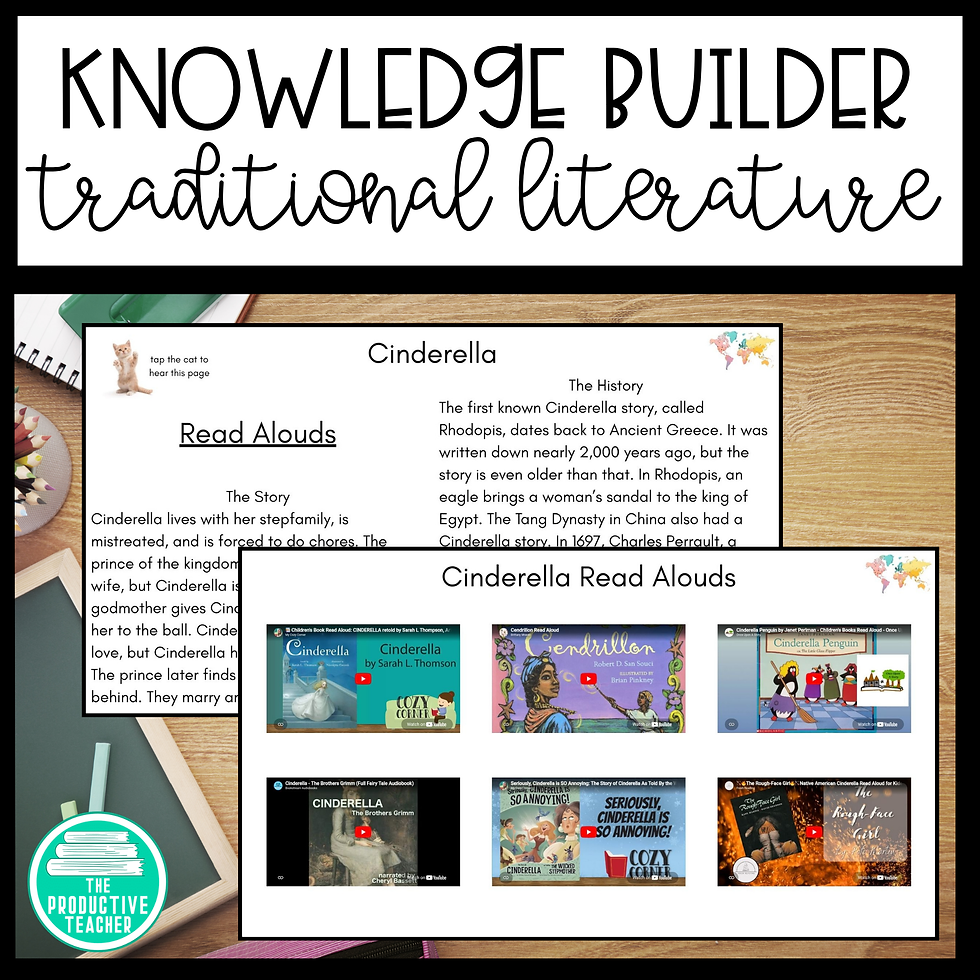
When students click a black dot, they are taken to the story's information page. The information page provides a brief summary of the story and historical context.

The next page has six videos for the story. Most of the videos are read alouds, but occasionally (especially for the Greek myths), they are cartoons.

You can check out the Traditional Literature Knowledge Builder here for free.
If you would like a copy of the file to share with your students, you can purchase a Canva template link for $5. Click the picture below to purchase it at Teachers Pay Teachers.


Comments