
Decoding the CH Sound

Updated: Aug 7, 2024
We already know the letters ch can make the /ch/ sound.
Introducing the CH Sound
Look at the pictures below. Pay attention to the letters making the /ch/ sound.

The letters tch make the /ch/ sound after a short vowel.
Look at the pictures below. Pay attention to the letters making the /ch/ sound.

There are other letter combinations that can make the /ch/ sound. These are all less common spellings of the /ch/ sound.
TI – The letters ti can make the /ch/ sound before the letters on. The letters tion can also be considered a final stable syllable.
TU – The letters tu can make the /ch/ sound. The letters tu can make the /ch/ sound as a part of the final stable syllable ture that makes the /chur/ sound. The letters tu can also make the /ch/ sound on their own as in the word tarantula.

Practice the CH Sound
The best way we can remember the sounds letters make is to practice. Our Learning to Read workbook has cards you can use to practice with the /ch/ sound. You can also make your own notecards to practice letters and sounds. Just a few minutes of practice a day will make a huge difference!
Reading Words
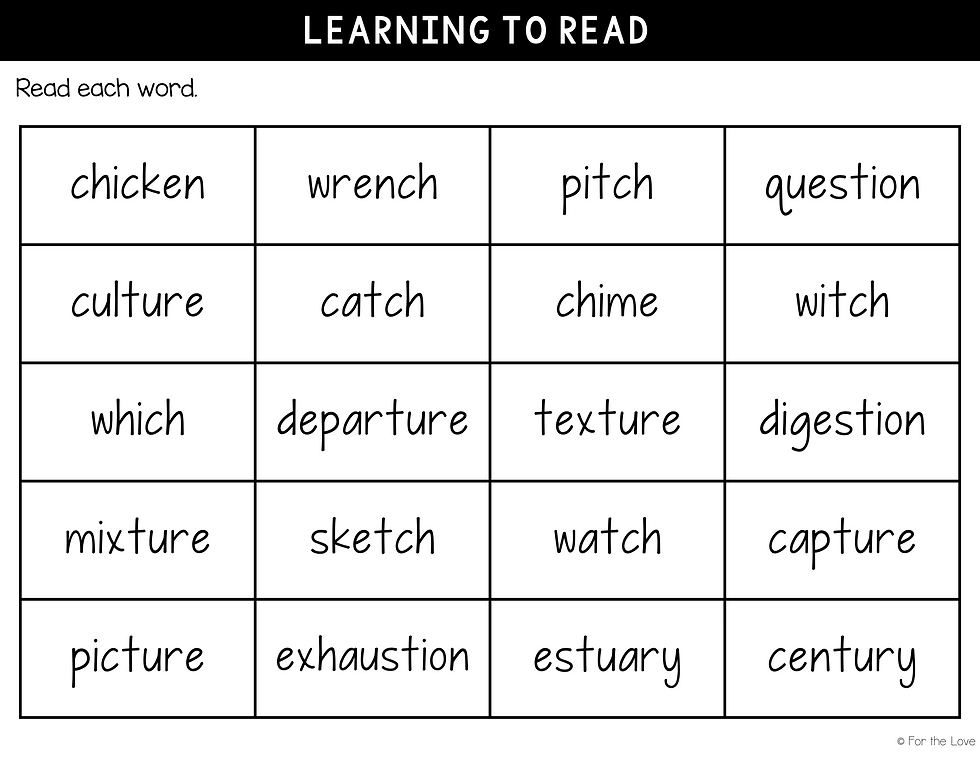
Congratulations! You can now read more words! You can practice reading the words on the chart.
Writing Practice
You can also practice writing words with the /ch/ sound. Make sure you follow explicit handwriting instructions to ensure you are writing efficiently. Writing efficiently is a huge part of building writing stamina.
Video Guidance
You can use this video to prepare for a lesson with your student, or your student can work with the video independently.
LEARNING TO DECODE PROGRAM
Take your learning to the next level with our Learning to Read Workbook!

Learning to read is a systematic process that requires explicit instruction. Our learning to read program breaks down every sound students need to know to learn how to read. Every step of the program includes picture examples, sound practice, reading practice, and writing practice.
The best part of the program is that anyone who is a competent reader can help a student through the program. Use our webpages, videos, and the pages in the workbook to guide your student’s learning. Students work through the program at their own pace. This is a perfect supplement to what students are learning in school.


Comments